27 Jun 2026
Mapping Seasonal Form Fluctuations Across Gridiron, Court, and Turf Events for Layered Selection Builds
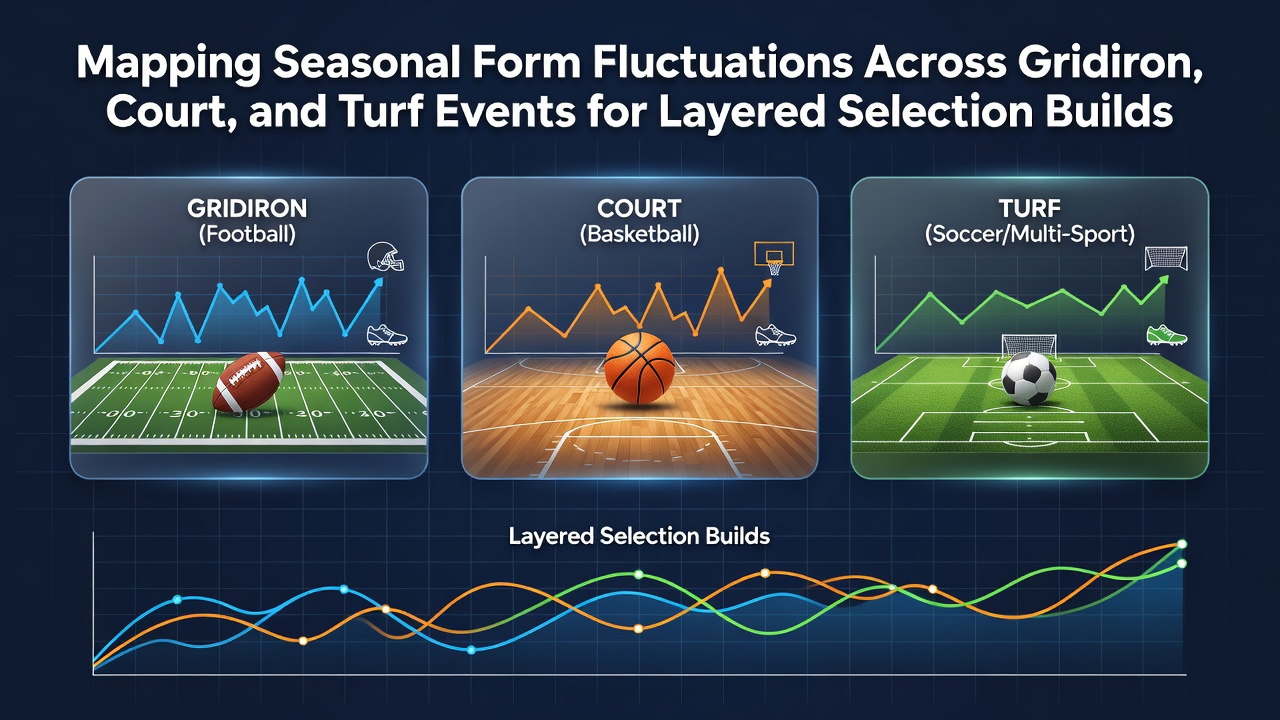
Seasonal form fluctuations create measurable patterns that analysts track across gridiron matchups, court competitions, and turf races, and these variations supply the foundation for layered selection builds that combine multiple data points into structured betting frameworks. Observers note that American football teams display distinct performance shifts tied to weather cycles, injury timelines, and schedule density, while basketball squads and tennis players reveal momentum changes linked to travel demands and surface transitions, and horse racing results fluctuate with track conditions and breeding cycles that peak at certain months of the year.
Gridiron Performance Cycles Shape Early Layer Foundations
Gridiron schedules run from September through January, and data from multiple seasons shows that teams in colder climates post stronger rushing outputs during October and November when temperatures drop, whereas dome-based franchises maintain steadier passing efficiency across the full campaign. Researchers tracking player snap counts find that offensive lines experience a measurable dip in run-blocking grades after week 12 because accumulated fatigue compounds with increased defensive schemes that emphasize stunts and twists. Layered selection builds begin with these gridiron baselines, and analysts add court-sport overlays only after confirming that the football component aligns with historical seasonal norms rather than outlier weeks.
Court Events Reveal Momentum Windows That Complement Gridiron Data
Basketball leagues operate on compressed calendars that run October to June, and performance analytics indicate that teams achieve peak three-point efficiency between December and February before travel fatigue and back-to-back games erode shooting percentages. Tennis circuits span the calendar year with surface rotations from hard courts in January and February to clay in April and May, and players who excel on one surface frequently post adjusted win rates when moving to grass in June and July. Those who study these transitions document that service-hold percentages drop by measurable margins on slower surfaces, which creates opportunities to layer tennis selections onto gridiron models during overlapping calendar windows. June 2026 marks the start of the grass-court swing that coincides with the conclusion of several basketball playoff series, allowing analysts to cross-reference late-season basketball rest advantages with early grass-court adaptation metrics.
Turf Racing Patterns Add Depth to Multi-Sport Layers
Horse racing on turf surfaces follows breeding and weather cycles that produce clear seasonal clusters, and records from major circuits show that European-trained runners post improved results on firm ground during late spring and early summer before softer autumn conditions favor stamina-oriented bloodlines. American turf events display similar shifts, with speed figures rising in drier months and declining when rainfall increases. Analysts incorporate these turf variables into layered builds by matching them against gridiron and court data, so a selection might combine a football team's historical November rushing edge with a tennis player's grass-court hold rate and a turf horse's distance aptitude on firm ground. The approach requires verifying that each layer draws from independent seasonal drivers rather than correlated noise.
Constructing Layers Through Cross-Sport Verification
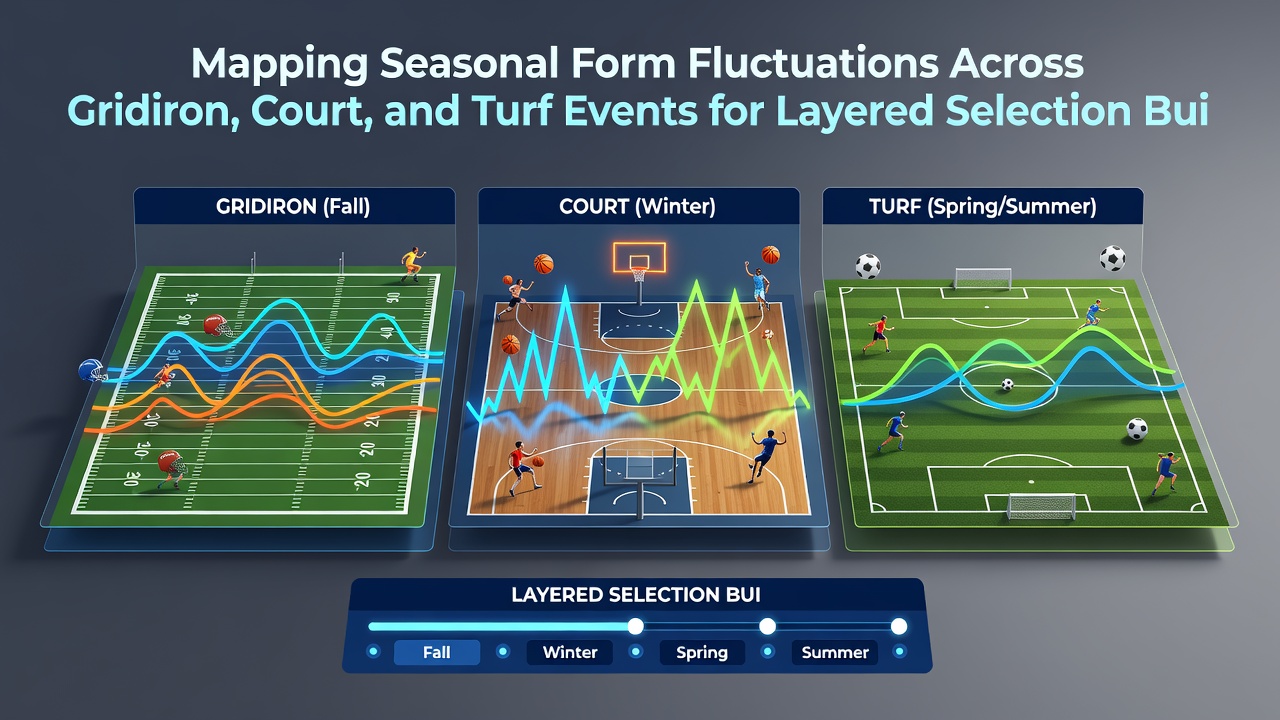
Layered selection builds gain stability when each component passes independent verification against its own seasonal dataset. One common sequence starts with a gridiron rushing-efficiency filter for November games, adds a basketball team-rest metric drawn from December-to-February shooting trends, and completes the structure with a turf-racing distance filter for June events on firm ground. Data indicates that this sequential filtering reduces variance because each sport contributes a distinct cyclical driver. Studies from academic sports-performance programs, including work presented at the MIT Sloan Sports Analytics Conference, demonstrate that multi-domain models outperform single-sport approaches when seasonal alignment is confirmed through separate historical samples.
Calendar Overlaps Create Practical Application Windows
June 2026 presents a notable overlap where basketball playoff conclusions intersect with the opening of grass-court tennis and the start of European turf-racing festivals. Analysts who map these periods find that rest advantages from concluded basketball seasons can inform tennis player-selection models, while firm-ground turf metrics align with early-summer football training-camp reports that preview next-season rushing tendencies. The process requires maintaining separate seasonal databases for each sport and updating them at consistent intervals rather than blending raw statistics across domains.
Verification Steps Maintain Layer Integrity
Verification begins with isolating each sport's seasonal dataset and confirming that teh chosen metric exhibits statistically significant variation across months. Next, analysts test whether the selected variables remain independent when combined, using correlation checks that flag redundant inputs. A final review confirms that the resulting layered structure produces consistent output ranges across multiple historical seasons rather than fitting only to recent results. Organizations such as the American Gaming Association publish aggregated performance summaries that support these verification routines when analysts seek neutral benchmarks.
Conclusion
Seasonal form fluctuations across gridiron, court, and turf events supply distinct data streams that, when verified independently and combined through sequential filtering, support layered selection builds with measurable structural stability. Observers who maintain separate seasonal records for each sport and align them only at verified calendar overlaps produce frameworks that reflect actual cyclical patterns rather than coincidental alignment. The method relies on disciplined data separation followed by targeted recombination, which preserves the integrity of each layer while allowing cross-sport context to inform final construction.